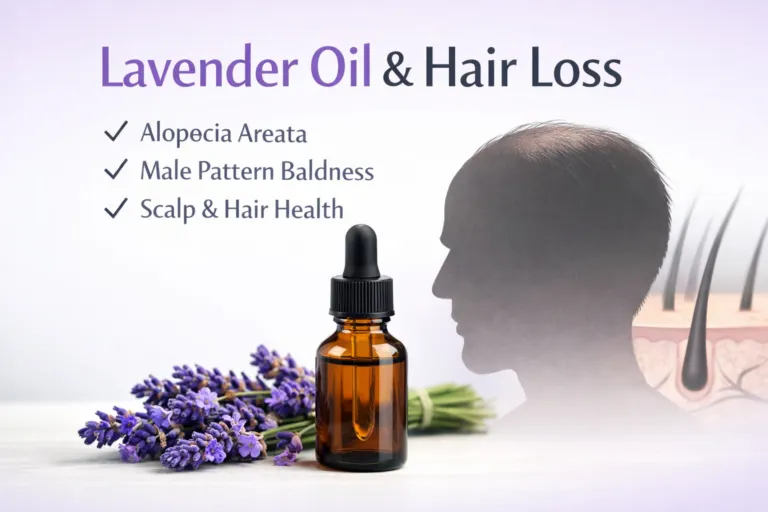
Rosemary Oil and Hair Loss: Evidence, Mechanisms, and Clinical Implications for Male Pattern Baldness and Scalp Health
Keywords: Rosmarinus officinalis, rosemary leaf oil, androgenetic alopecia, male pattern baldness, scalp inflammation, seborrheic dermatitis, essential oils, 5α-reductase, minoxidil
Abstract
Hair loss—particularly androgenetic alopecia (AGA, “male pattern baldness”)—is driven by androgen signaling (notably dihydrotestosterone, DHT), follicular miniaturization, and a variable contribution from perifollicular inflammation and scalp microbiome changes. Rosemary (Rosmarinus officinalis) leaf oil is widely used as a topical botanical for hair and scalp care. This article summarizes the mechanistic rationale and the current clinical evidence for rosemary leaf oil in AGA, and reviews data relevant to overall scalp and hair health (e.g., inflammation, microbial balance, and dermatitis). The strongest clinical evidence is a randomized comparative trial reporting rosemary oil produced hair-count improvements comparable to 2% minoxidil after 6 months, with less reported scalp itching in the rosemary group.[1] Preclinical data suggest anti-androgenic activity via inhibition of testosterone 5α-reductase and additional anti-inflammatory/antioxidant effects, which may support a more favorable scalp environment for hair growth.[2] Safety reviews indicate rosemary-derived ingredients are generally safe in cosmetics when properly formulated, though irritation and allergic contact dermatitis can occur—especially with undiluted essential oil.[3] Overall, rosemary leaf oil appears promising as an adjunct for AGA and scalp health, but broader, placebo-controlled trials and standardized formulations are needed to define efficacy, dose, and long-term safety.
1. Introduction
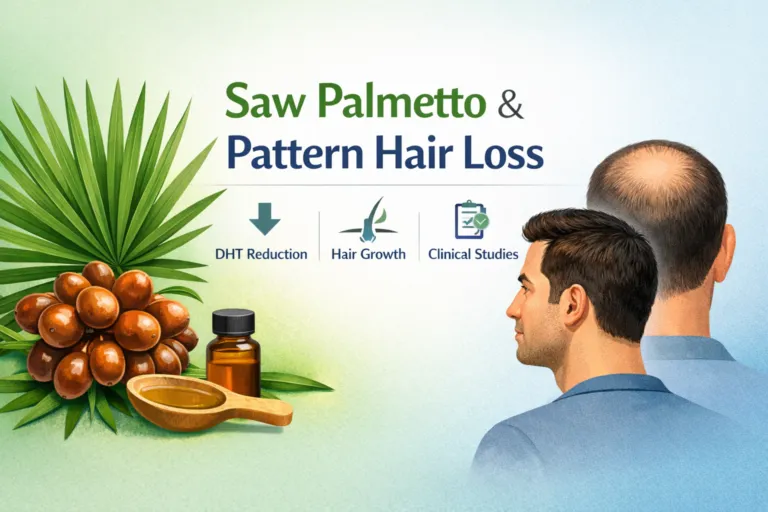
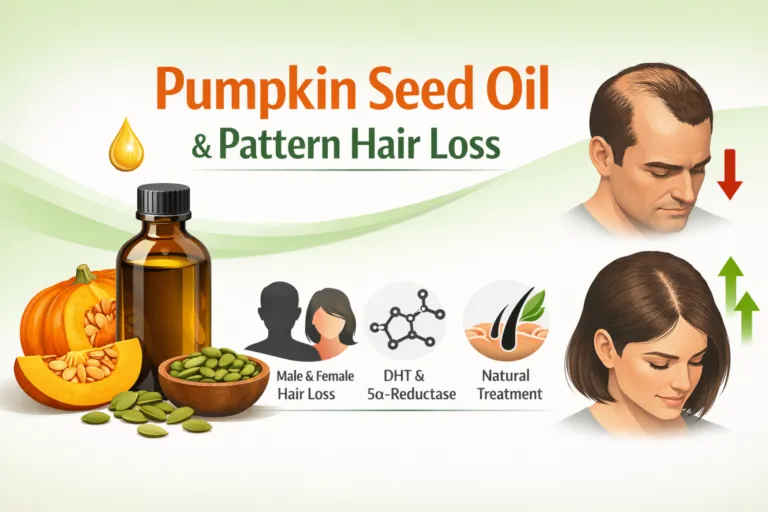
Androgenetic alopecia (AGA) is the most common form of patterned hair loss in men and also affects women. It is characterized by progressive miniaturization of susceptible hair follicles, leading to reduced hair shaft diameter, shortened anagen (growth) phase, and eventual visible thinning. Contemporary models emphasize androgen metabolism and DHT signaling, with additional roles for microinflammation, perifollicular fibrosis, oxidative stress, and metabolic shifts within the follicle niche.[4]
Standard evidence-based therapies include topical minoxidil and (for many men) oral 5α-reductase inhibitors such as finasteride, which reduce DHT production.[5],[6] Interest in plant-derived topical agents has grown due to accessibility and tolerability concerns with pharmacologic options. Rosemary leaf oil has emerged as a leading candidate, supported by both preclinical findings and limited clinical research.
2. Botanical and Chemical Context
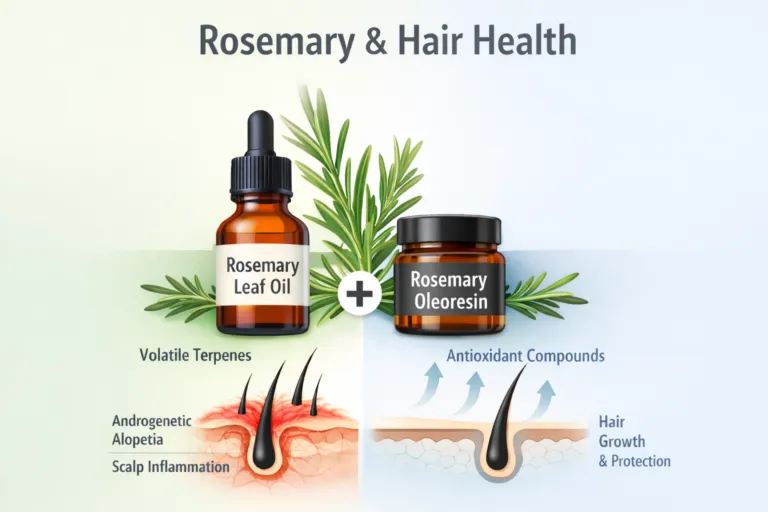
Rosemary essential oil is obtained from Rosmarinus officinalis (also listed in some modern taxonomies as Salvia rosmarinus). Its volatile profile varies by chemotype and growing conditions, commonly including monoterpenes (e.g., 1,8-cineole/eucalyptol, α-pinene, camphor) and other constituents. Because essential oils are complex mixtures, biological effects can depend strongly on concentration, vehicle, and individual sensitivity.
3. Mechanistic Rationale for Hair Growth and AGA
3.1 Anti-androgenic activity (5α-reductase inhibition)
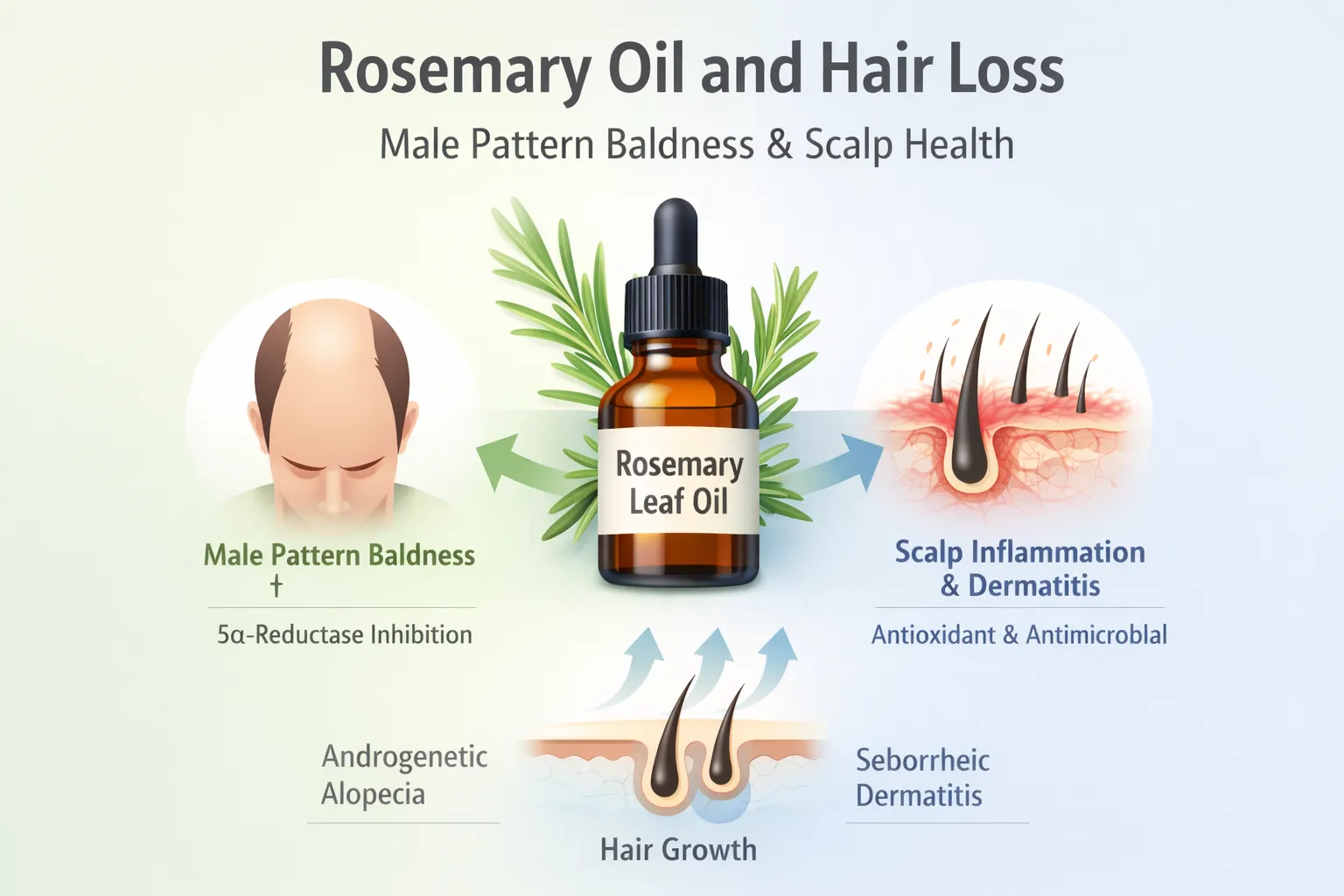
A central driver of AGA is conversion of testosterone to DHT via 5α-reductase enzymes, followed by DHT-mediated signaling that promotes follicular miniaturization in genetically susceptible scalp regions. Inhibition of 5α-reductase is a validated therapeutic strategy in AGA (e.g., finasteride).[5],[6]
Preclinical work on rosemary leaf extract has demonstrated substantial inhibition of testosterone 5α-reductase activity in vitro, and identified candidate active constituents (e.g., 12-methoxycarnosic acid) in activity-guided experiments.[2] While these data do not directly establish that topical rosemary essential oil achieves sufficient follicular concentrations in humans, they provide a plausible anti-androgenic mechanism relevant to patterned hair loss.
3.2 Anti-inflammatory and antioxidant effects
Increasing evidence implicates perifollicular inflammation and oxidative stress in AGA progression and symptom burden (itch, sensitivity, erythema).[4] Rosemary-derived compounds have demonstrated anti-inflammatory and antioxidant activities in broader biomedical literature, suggesting that topical rosemary preparations may support scalp comfort and reduce inflammatory signaling that can accompany hair loss conditions.[3],[4]
3.3 Microcirculation and follicular environment
Follicle function is sensitive to its local microenvironment, including dermal perfusion and signaling within the dermal papilla niche. The best-studied topical vasodilator for AGA is minoxidil; although its precise hair-growth mechanism is not fully defined, it is considered a mainstay therapy and is associated with improved hair density in many users.[7] Rosemary has been traditionally associated with effects on microcapillary perfusion, and improved scalp comfort may indirectly support consistent hair-care routines—an important factor because most topical hair-loss therapies require months of adherence.
4. Clinical Evidence for Rosemary Leaf Oil in Androgenetic Alopecia
4.1 Randomized comparative trial versus 2% minoxidil
The most frequently cited human study is a randomized comparative trial in patients with AGA, in which participants applied either rosemary oil or 2% minoxidil for 6 months with assessments at baseline, 3 months, and 6 months. The study reported that both groups showed a significant increase in hair count at 6 months compared with baseline, and the rosemary group reported less scalp itching than the minoxidil group.[1]
Interpretation: This trial suggests rosemary oil may be a viable botanical alternative or adjunct for some individuals with AGA—especially those who experience irritation with minoxidil. However, the evidence base remains narrow: replication, placebo-controlled designs, standardized formulations, and objective outcomes (e.g., phototrichograms) across diverse populations would strengthen confidence in real-world effectiveness.
5. Rosemary Leaf Oil and Overall Scalp Health
5.1 Seborrheic dermatitis and dandruff-associated outcomes
Scalp conditions such as seborrheic dermatitis can worsen shedding, cause inflammation, and reduce tolerance of hair-loss treatments. A recent randomized trial comparing a topical rosemary extract lotion with ketoconazole for scalp seborrheic dermatitis reported that both interventions were effective in improving disease severity and quality-of-life outcomes.[8] Although this study used rosemary extract rather than essential oil, it supports the broader concept that rosemary-derived topicals may benefit inflammatory scalp disorders.
5.2 Antimicrobial activity relevant to scalp microbiology
The scalp microbiome—particularly yeast (e.g., Malassezia) and bacteria (including Staphylococcus species)—is implicated in dandruff, folliculitis, and irritation. Rosemary essential oil has demonstrated antimicrobial effects in laboratory studies against clinically relevant organisms, including Staphylococcus aureus strains.[9] These in vitro findings do not automatically translate to clinical outcomes (because concentrations on skin are lower and biofilms can be resistant), but they provide a plausible rationale for rosemary’s use in scalp-care formulations.
6. Safety, Tolerability, and Formulation Considerations
Safety assessments of rosemary-derived cosmetic ingredients indicate they are generally safe in typical cosmetic use conditions, and available data do not support phototoxicity as a major concern. Nevertheless, essential oils can cause irritation or allergic contact dermatitis, and adverse reactions have been reported—particularly when used undiluted or on compromised skin.[3]
6.1 Practical topical-use guidance (risk-reduction)
- Dilution: Avoid applying undiluted rosemary essential oil directly to the scalp. Use a properly formulated leave-on product or dilute in a carrier oil (commonly within low single-digit percentages in cosmetic practice).
- Patch testing: Apply a small amount to a limited skin area for several days to screen for irritation/sensitization before broader scalp use.
- Scalp barrier status: Be especially cautious with eczema, active dermatitis, open excoriations, or after harsh chemical treatments.
- Adjunctive—not substitutive—care: For progressive AGA, consider rosemary oil as an adjunct to evidence-based therapies (e.g., minoxidil/finasteride) when appropriate, and consult a dermatologist for diagnosis and monitoring.
7. Limitations of Current Evidence
- Limited clinical trials: The clinical AGA literature for rosemary oil is dominated by a single comparative trial; broader replication is needed.[1]
- Heterogeneity of products: Essential oils vary in chemotype and composition; over-the-counter products differ in concentration and vehicle, complicating dose-response conclusions.
- Mechanistic gaps: 5α-reductase inhibition is supported in preclinical work using rosemary extracts and isolated constituents; direct confirmation for topical essential oil delivery to hair follicles in humans is limited.[2]
8. Conclusions
Rosemary (Rosmarinus officinalis) leaf oil has a credible mechanistic rationale for supporting hair growth in AGA, including preclinical evidence for anti-androgenic activity (5α-reductase inhibition) and broader anti-inflammatory/antioxidant effects. The leading clinical trial suggests rosemary oil may improve hair counts comparably to 2% minoxidil after 6 months, with fewer reports of scalp itching.[1] Additional evidence indicates rosemary-derived topicals may benefit overall scalp health, including inflammatory dermatoses such as seborrheic dermatitis, and rosemary essential oil exhibits antimicrobial activity in vitro against organisms relevant to scalp conditions.[8],[9]
Given the current state of evidence, rosemary leaf oil is best viewed as a potentially useful adjunct for hair loss and scalp-care regimens—particularly for individuals seeking botanical options or improved tolerability—while acknowledging the need for larger, placebo-controlled trials and standardized formulations to clarify efficacy, dosing, and long-term safety.
References
- Panahi Y, Taghizadeh M, Marzony ET, Sahebkar A. Rosemary oil vs. minoxidil 2% for the treatment of androgenetic alopecia: a randomized comparative trial. Skinmed. 2015. PMID: 25842469. (PubMed) [1]
- Murata K, Noguchi K, Kondo M, et al. Promotion of hair growth by Rosmarinus officinalis leaf extract and identification of an active constituent for 5α-reductase inhibition. Phytotherapy Research. 2013. PMID: 22517595. (PubMed) [2]
- Fiume MM, Bergfeld WF, Belsito DV, et al. Safety Assessment of Rosmarinus officinalis (Rosemary)-Derived Ingredients as Used in Cosmetics. International Journal of Toxicology. 2018. (Publisher) [3]
- Chen S, et al. Androgenetic Alopecia: An Update on Pathogenesis and Pharmacological Treatment. 2025. (PMC) [4]
- Kaufman KD, Dawber RP. Finasteride, a Type 2 5α-reductase inhibitor, in the treatment of men with androgenetic alopecia. Expert Opinion on Investigational Drugs. 1999. PMID: 15992088. (PubMed) [5]
- Kaufman KD, et al. Finasteride in the treatment of men with androgenetic alopecia (type II 5α-reductase inhibition and DHT reduction). Journal of the American Academy of Dermatology. 1998. (Abstract) [6]
- Suchonwanit P, Thammarucha S, Leerunyakul K. Minoxidil and its use in hair disorders: a review. Drug Design, Development and Therapy. 2019. (PMC) [7]
- Sadati MS, et al. Efficacy of topical rosemary extract lotion versus ketoconazole in scalp seborrheic dermatitis: randomized clinical trial. 2024. (PMC) [8]
- Bowbe KH, et al. Anti-staphylococcal activities of Rosmarinus officinalis (rosemary) essential oil (laboratory evaluation). 2023. (PMC) [9]